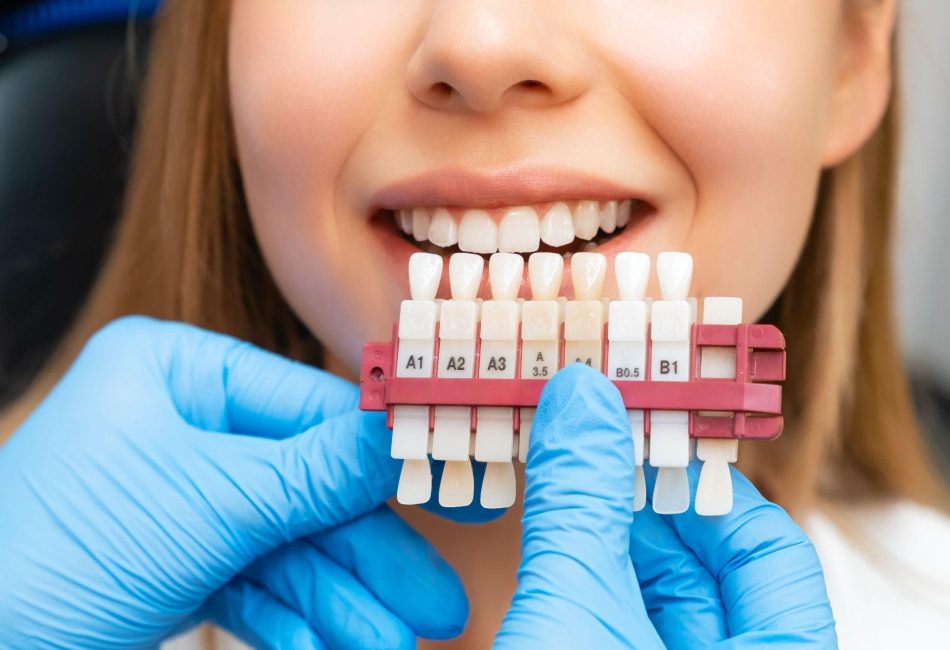
You see it everywhere: flawless, bright smiles on social media, in magazines, and on TV. It makes you wonder how they get their teeth so white.
Maybe you’ve tried whitening strips or those DIY baking soda hacks. At first, they seem to work, but after a while, the stains creep back, and your teeth feel oddly sensitive. Sound familiar?
At-home teeth whitening promises convenience, but the results don’t always last. Professional whitening is fast, powerful, and done under expert supervision. But is it really worth the price?
Let’s take a closer look so you can decide the best way to get the bright, confident smile you’ve been chasing.
Comparing Teeth Whitening Options: At-Home vs. Professional
Ads for whitening strips, LED kits, and even DIY hacks promise a whiter smile in just days. They sound tempting, especially when they claim to be “just as good as professional whitening.”
But here’s the truth: not all whitening methods work the same way. Some are effective but take forever, some barely work at all, and some can actually damage your teeth.
So, how do you choose the right option?
Let’s break down what really works, what doesn’t, and what you should consider before making a decision.
At-Home Teeth Whitening: Affordable, Convenient, but Limited
At-home whitening is appealing for one big reason: it’s cheap and easy. You can pick up a whitening kit at the drugstore, apply it at home, and see some improvement over time.
But there’s a catch. Most at-home products only remove surface stains, not deep discoloration. And if you’re not careful, some can actually make your teeth more sensitive.
Common At-Home Whitening Methods
✅ Whitening Strips & Gels – These use a mild peroxide solution to gradually lift stains. Most require daily use for 1-2 weeks to see results.
✅ LED Light Kits – These claim to accelerate whitening, but the light itself doesn’t actually whiten teeth—it just enhances the bleaching agent in the gel. Results vary widely.
✅ Whitening Toothpaste & Rinses – These can help prevent new stains but don’t do much to remove existing discoloration. They work more as a maintenance tool.
✅ DIY Remedies (Baking Soda, Charcoal, Peroxide Rinses) – While popular, these can erode enamel over time, making teeth more prone to staining and sensitivity.
Pros of At-Home Whitening:
✔ Affordable – Prices range from $20 to $100 for strips or LED kits.
✔ Easy to Use – No dentist visit is required, just follow the instructions at home.
✔ Good for mild stains – If your teeth are just a little yellow, at-home methods can help.
Cons of At-Home Whitening:
❌ Takes weeks (or months) for results – You’ll need patience. Most at-home methods require consistent daily use before you see a difference.
❌ Uneven whitening – One-size-fits-all strips and trays don’t always reach every tooth, leading to patchy results.
❌ Increased sensitivity – Overusing at-home products can weaken enamel and cause pain when eating or drinking hot/cold items.
❌ Limited effectiveness – At-home products can only whiten so much. They don’t work well on deep stains from coffee, wine, smoking, or aging.
Who At-Home Whitening Is Best For:
- People who only need minor stain removal or maintenance.
- Those who are patient and willing to whiten over several weeks.
- Anyone on a tight budget who doesn’t mind mild to moderate results.
If you just want a slight improvement and don’t need dramatic whitening, at-home kits can be a good option. But if you want significant whitening, long-lasting results, or have deep stains, professional treatment is the better choice. With expert care and stronger whitening agents, teeth whitening in Bradenton can help you achieve a noticeably brighter smile that lasts.

Professional Teeth Whitening: Fast, Safe, and Long-Lasting
Professional whitening is done by a dentist using higher-strength whitening agents that aren’t available over the counter.
These treatments whiten teeth faster, more evenly, and with less risk of sensitivity because they are carefully applied and monitored.
Types of Professional Whitening:
- In-Office Whitening (Laser or Light-Activated Treatments)
This is the fastest and most effective option for whitening your teeth. A dentist applies a high-strength bleaching gel and uses a special light or laser to enhance the results.
Popular systems like Zoom! Whitening and Opalescence Boost can whiten teeth by several shades in just one session (usually 60–90 minutes). This option is best for people who want instant, dramatic results with minimal effort.
- Custom Take-Home Whitening Trays
If you prefer gradual whitening at your own pace, dentists offer custom-fitted trays with professional-strength whitening gel for at-home use. These trays provide better coverage and stronger results than over-the-counter kits while reducing gum irritation.
Most people see noticeable improvements within one to two weeks, making it a great option for those who want flexibility and control over their whitening process.
- Internal Whitening (For Deep Stains or Root Canal-Treated Teeth)
For teeth that have darkened due to trauma, aging, or root canal treatments, traditional whitening may not work. In such cases, it is often best to opt for root canal treatment to address the underlying issue before considering whitening procedures. Internal whitening involves placing a bleaching agent inside the tooth to lighten it from within. This method is typically used for one or two problem teeth that don’t respond to surface whitening treatments.
- Combination Whitening (In-Office + Take-Home Trays)
Some dentists offer a combo approach that starts with an in-office treatment for instant brightness, followed by custom take-home trays to maintain the results. This option is ideal for those who want long-lasting whiteness without frequent visits to the dentist.
Pros of Professional Whitening:
✔ Instant, noticeable results – Teeth can brighten by 3-8 shades in just one session.
✔ Longer-lasting effects – With proper care, results can last 1-3 years.
✔ Safer for enamel – Dentists control the concentration of whitening agents to prevent damage.
✔ Even whitening – Unlike strips or trays, professional treatment ensures every tooth is evenly whitened.
Cons of Professional Whitening:
❌ Higher cost – In-office whitening can range from $300 to $1,000, depending on the method used. Custom take-home trays are typically $200 to $400.
❌ Requires a dentist visit – You’ll need an appointment, but for many, the fast results make it worth it.
Who Professional Whitening Is Best For:
- People with deep stains from coffee, wine, smoking, or aging.
- Anyone who wants fast results for a special event (wedding, job interview, vacation).
- Those who have tried at-home whitening but didn’t see enough improvement.
- Individuals with sensitive teeth who need safer, controlled whitening.
Professional whitening is the best choice if you want significant, longer-lasting results with minimal risk. It’s especially ideal for removing deep stains and achieving a noticeably brighter smile in just one visit.
The Best Path to a Brighter, More Confident Smile
Not all whitening methods are created equal. At-home kits take time and may not deliver lasting results, while professional treatments offer instant, dramatic whitening.
If you want fast, safe, and long-lasting brightness, professional whitening is the clear winner. No matter which option you choose, good oral care is key to keeping your smile white.
A brighter smile isn’t just about looks—it’s about confidence that lasts.